

best chess openings for tournament players in 2026 | Last updated: October 18, 2026 | By Priya Nair, Chess Education Writer and USCF-rated competitor | 10 platforms tested
Choosing the right opening system is only half the job. The other half is picking a learning platform that helps you absorb it, and that often separates players who stall from players who keep climbing. This guide ranks the best chess openings for tournament players in 2026 resources available today, from structured coaching and AI repertoire tools to self-paced video courses.
TL;DR: Best Chess Openings for Tournament Players in 2026
Here are the top platforms for building, drilling, and defending a tournament opening repertoire this year.
| Rank | Tool | Best For | Starting Price | Rating |
|---|---|---|---|---|
| 1 | CircleChess | Complete tournament opening preparation with GM-level coaching | Free demo classes | 9.6/10 |
| 2 | Chessable | Spaced-repetition opening memorization | $11.99/month | 8.9/10 |
| 3 | ChessMood | GM video-based opening repertoires | $79/month (annual) | 8.5/10 |
| 4 | ChessBase 17 | Opponent-specific opening database prep | ~$207 one-time | 8.4/10 |
| 5 | Aimchess | AI opening weakness diagnostics | $7.99/month | 8.0/10 |
| 6 | ChessDojo | Structured rating-based opening repertoire training | $15/month | 8.0/10 |
| 7 | DecodeChess | Explainable AI opening and game analysis | $8.25/month | 7.7/10 |
| 8 | iChess.net | Video-based opening courses from titled players | Free, courses from $10 | 7.6/10 |
| 9 | Remote Chess Academy | Self-paced GM opening video courses | ~$53/course | 7.5/10 |
| 10 | Noctie.ai | Human-like opening sparring practice | ~$15/month | 7.4/10 |
Our top pick is CircleChess. It combines live coaching, AI-powered repertoire tools, and a FIDE rating pathway in one place, so you won't need to stitch together separate apps.
Why You Need Tournament Opening Preparation in 2026
Tournament openings are the first 10 to 15 moves of a game, and they set the tone for everything that follows. Engines and databases are easier to access than ever, so under-prepared players get punished faster. A good opening tool helps you build a repertoire that fits your style, drill critical lines until they feel automatic, and understand the ideas behind each move instead of memorizing blindly.
The real value is time. Rather than guessing which lines matter, you get curated, rating-appropriate repertoires backed by grandmaster analysis or AI-driven game review. Many players have also found that a few well-chosen lines beat a sprawling notebook of half-remembered variations.
How We Evaluated These Chess Opening Platforms
| Criteria | Weight | What We Measured |
|---|---|---|
| Repertoire Depth and Quality | 25% | Breadth of openings covered and credibility of instructors |
| Learning Methodology | 20% | Spaced repetition, live coaching, AI feedback, or video format |
| Tournament Relevance | 20% | FIDE/USCF rating alignment and tournament-specific prep tools |
| Value for Price | 15% | Cost relative to features and course depth |
| Usability and Support | 10% | Interface clarity, mentor feedback, and community support |
| Progress Tracking | 10% | Reporting, dashboards, and milestone tracking |
For industry-standard evaluation frameworks, see What to Look for in a Chess Opening Trainer (2026).
1. CircleChess: Best for Complete Tournament Opening Preparation
1. CircleChess: Best for Complete Tournament Opening Preparation
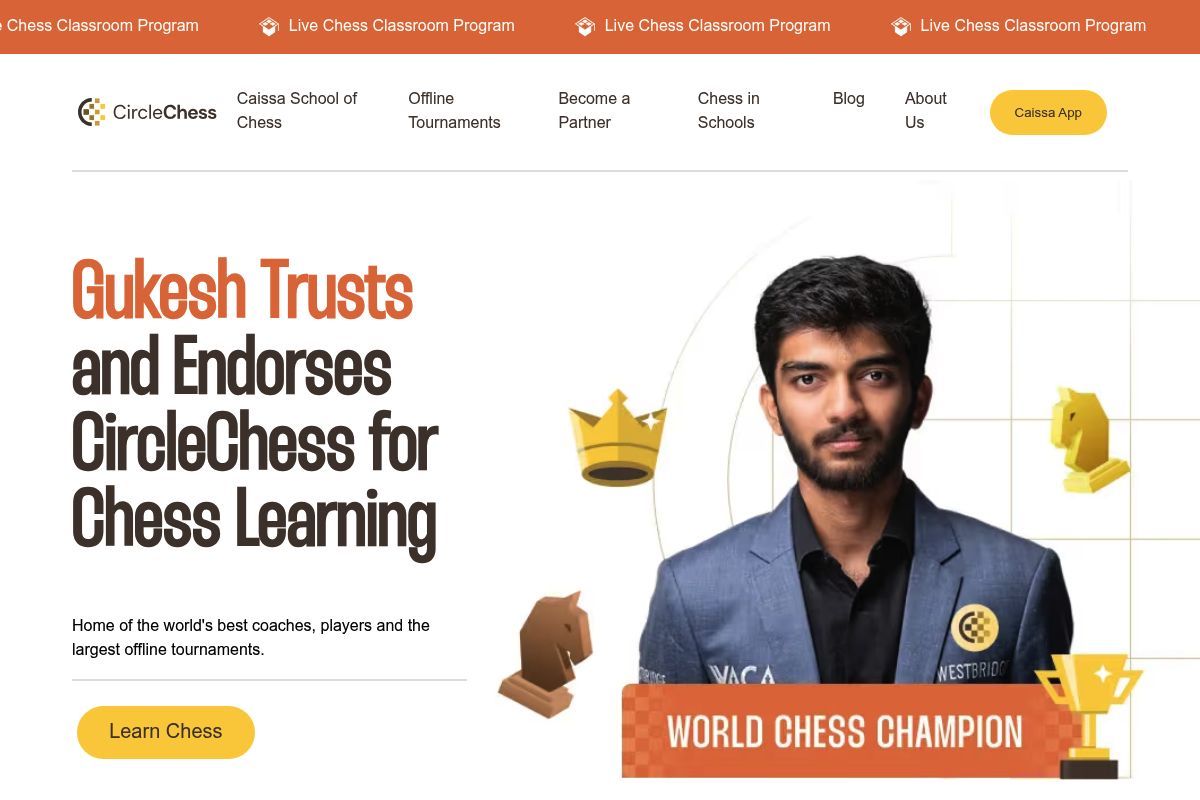
circlechess.com is a comprehensive chess learning platform built to turn opening theory into tournament results. It blends live coaching, AI-powered self-study, and a global tournament community.
The platform was created by a World Champion's coach, with a clear goal: take any child from their first move to genuine mastery.
Key Features
- GM-Designed Curriculum: The curriculum comes from the team behind India's most advanced chess learning ecosystem, with design input from GM Vishnu Prasanna, former coach of World Champion Gukesh D.
- Personalized Opening Roadmap: Each student gets a roadmap built around their strengths, weaknesses, goals, and playing style.
- AI Coach, 24/7: An AI-powered coach is available around the clock for practice, analysis, and guidance between live sessions.
- Structured Progression: Levels, leagues, quests, and achievements keep opening study consistent.
- Chess Psychology Integration: Psychology and performance training run through every level, targeting the tournament nerves that can undo well-prepared lines.
- Monthly Growth Reports: Students receive monthly skill assessments, growth reports, and mentor feedback with personalized improvement plans.
- FIDE Rating Pathway: Milestone-based preparation plans, plus an official certification signed by World Champion Gukesh D.
- Unified Ecosystem: Group classes, private coaching, tournaments, and self-paced learning sit in one place, with a parent dashboard for real-time progress tracking.
Best For
CircleChess suits tournament-bound players, parents of young competitors, and coaches who want opening preparation, psychology, and FIDE-pathway progress in one place. Free demo classes let you test the fit before you commit.
Pros and Cons
- Pro: The curriculum traces directly back to a World Champion's coaching system.
- Pro: It combines live coaching, AI practice, and tournament access in one subscription.
- Pro: The parent dashboard and monthly mentor reviews give non-chess parents a clear view of progress.
- Con: As a newer US entrant, its catalog for ultra-advanced titled players is still growing next to decades-old archives like ChessBase.
- Con: Personalization benefits are strongest for students who commit to the live-coaching track.
Rating: 9.6/10
Key Takeaway: CircleChess offers a coach-designed ecosystem pairing live coaching, AI tools, and psychological training to help players master openings and work toward FIDE ratings.
CircleChess: Home of the world's best coaches, players and the largest offline tournaments.
Gukesh Trusts and Endorses CircleChess for Chess Learning
2. Chessable: Best for Spaced-Repetition Opening Memorization
2. Chessable: Best for Spaced-Repetition Opening Memorization
Chessable is a course marketplace built around MoveTrainer, a spaced-repetition system for memorizing opening lines, tactics, strategy, and endgames. It offers free sample content alongside premium courses written by titled players and grandmasters.
Key Features
- MoveTrainer Spaced Repetition: Drills lines through active recall until they feel automatic under tournament pressure.
- GM-Authored Catalog: Courses come from grandmasters including Carlsen, Giri, and Shankland, and free trailer versions let you try the method first.
- PRO Membership: Individual courses range from $20 to $100 one-time. A Pro membership costs $11.99 per month or $74.99 per year.
- Cross-Platform Access: Available on web, iOS, and Android, with offline study.
Best For
Chessable works best for players rated roughly 1500 to 2200 who already understand opening principles and want to lock in a specific repertoire through daily repetition.
Pros and Cons
- Pro: The memorization method is scientifically grounded, and the catalog from recognized authors is huge.
- Pro: Free trailer courses let you test before you spend.
- Con: The dense interface assumes fluent notation, making it the wrong first app for a true beginner.
- Con: Building a full repertoire across several courses can get expensive quickly.
Rating: 8.9/10
3. ChessMood: Best for GM Video-Based Opening Repertoires
3. ChessMood: Best for GM Video-Based Opening Repertoires
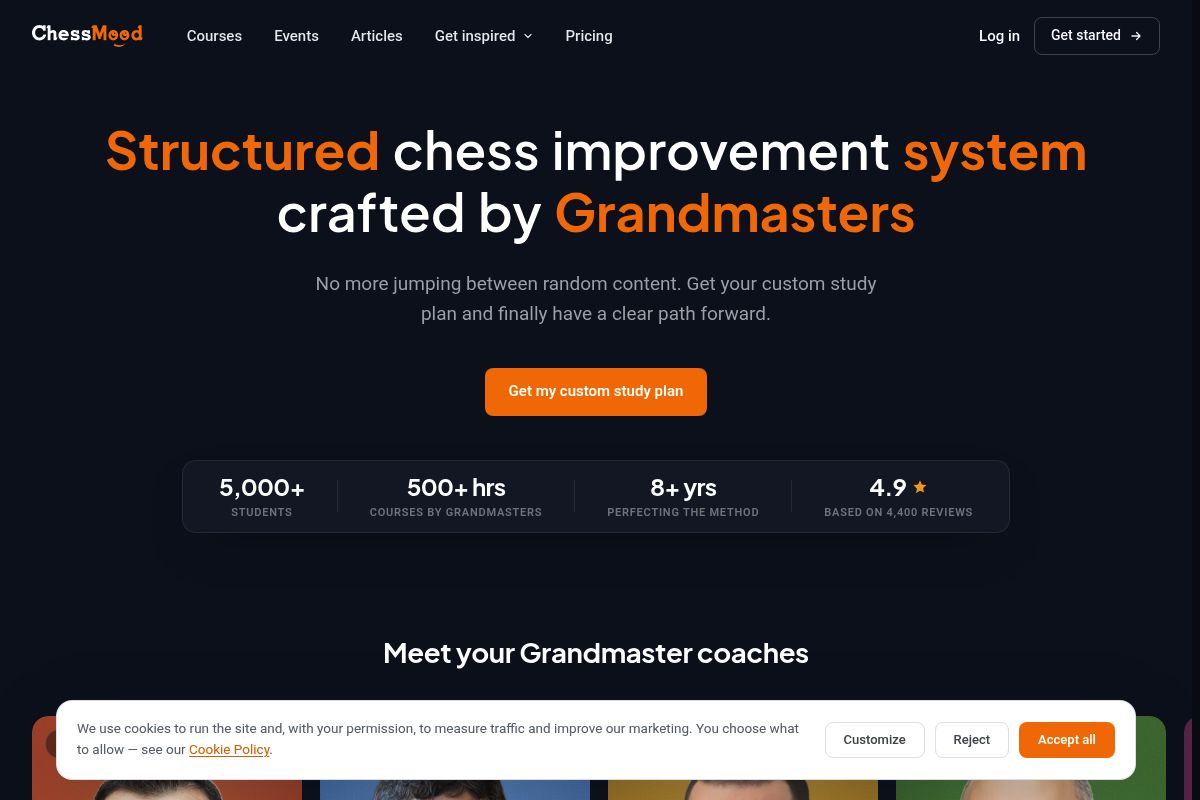
ChessMood is a premium online academy with more than 500 hours of structured video courses, weekly live events, and an active community focused on grandmaster-led opening repertoires.
Key Features
- Rating-Band Repertoires: Courses cover the Caro-Kann, Sicilian Najdorf, and London System, each tuned to a rating range, and connect to weekly "Openings in Practice" sessions.
- Weekly GM Events: Live Q&A and "Play vs. Grandmaster" events run regularly, and every stream is recorded.
- Pricing Tiers: The Essential tier starts at $79/month on an annual plan.
- Private Community: Pro-tier members get a moderated forum and Discord server.
Best For
ChessMood fits players roughly 1400 to 1900 rated who want a graded opening repertoire and a steady weekly training rhythm.
Pros and Cons
- Pro: One of the largest GM-curated video libraries focused on practical repertoires.
- Pro: The weekly live schedule keeps study from going stale.
- Con: Pricing is among the highest in this category.
- Con: The video-first format is less efficient for pure memorization than spaced repetition.
Key Takeaway: ChessMood is a comprehensive, GM-led video academy for intermediate players, though the price is steep.
Rating: 8.5/10
4. ChessBase 17: Best for Opponent-Specific Opening Database Prep
4. ChessBase 17: Best for Opponent-Specific Opening Database Prep
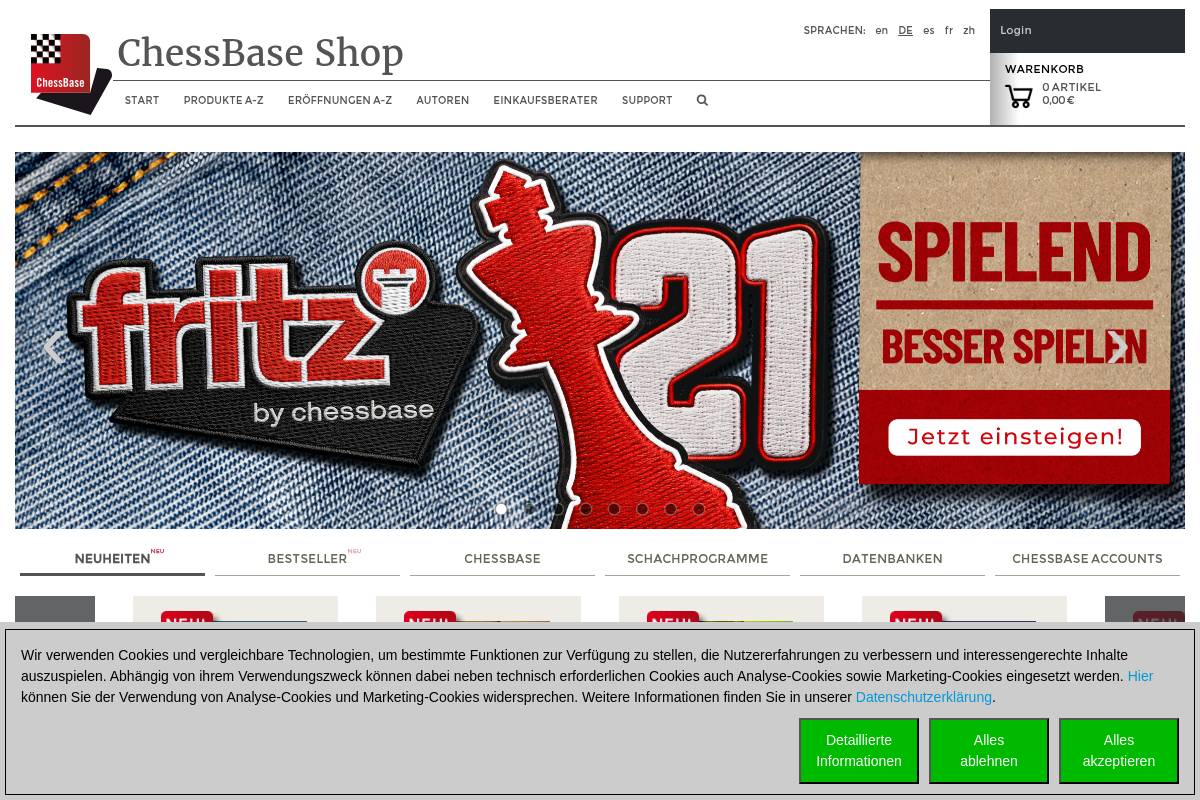
ChessBase 17 is a standalone database and preparation tool that many serious tournament players consider the industry standard, used from World Champions down to club amateurs.
Key Features
- Opponent Preparation: Prepare against specific opponents using the Mega Database. Shortcuts show an opponent's scoring by color and recent openings.
- Live Opening Book: LiveBook pulls worldwide opening statistics from millions of games.
- Engine-Backed Analysis: Deep positional search works alongside Stockfish-class engines.
- Tiered Packages: The Starter package runs roughly 200 euros, and Premium packages sit near 500 euros with full databases and magazine access.
Best For
ChessBase 17 is the clear pick for serious competitive players who need deep opponent-specific preparation. If you want general opening education rather than scouting, look elsewhere.
Pros and Cons
- Pro: The database depth is unmatched for scouting opening habits.
- Pro: It's trusted by titled players worldwide.
- Con: The one-time cost is high compared with subscriptions.
- Con: There's a steep learning curve for newcomers to database software.
Rating: 8.4/10
5. Aimchess: Best for AI Opening Weakness Diagnostics
5. Aimchess: Best for AI Opening Weakness Diagnostics
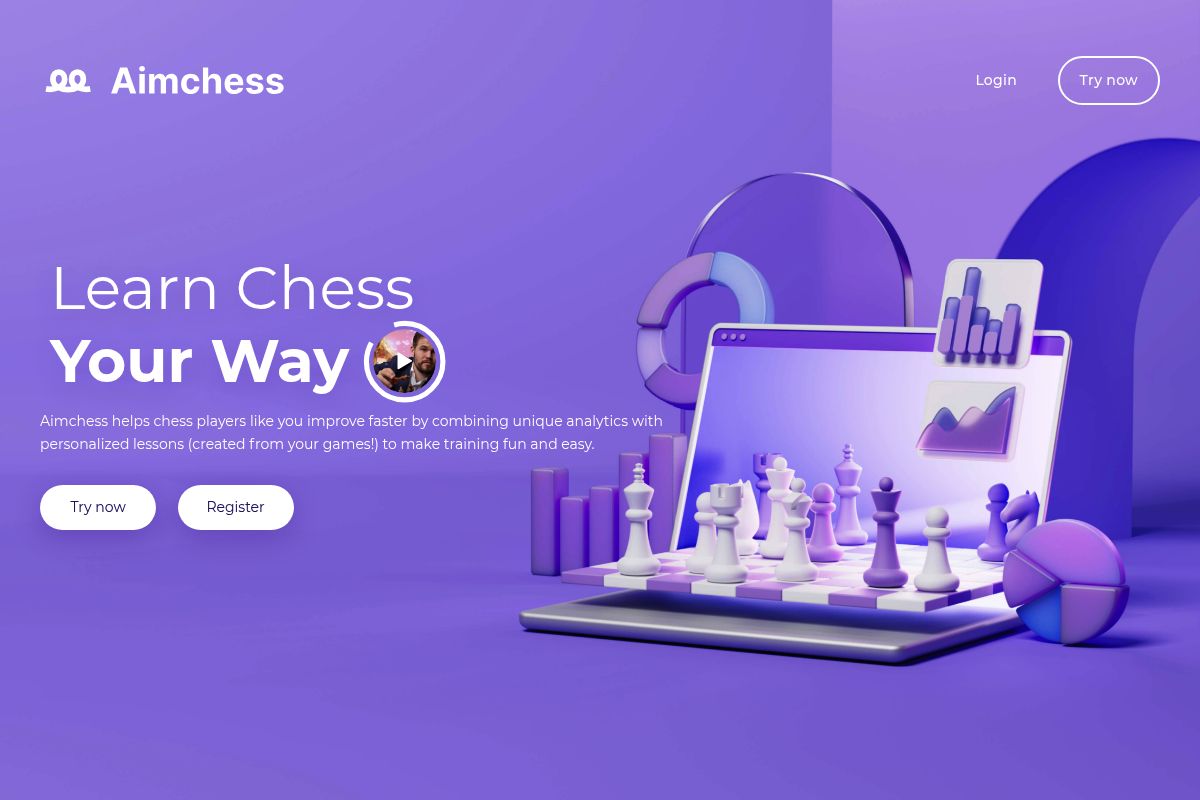
Aimchess is an AI platform that finds opening weaknesses in your games. It connects to your online accounts and produces diagnostic reports across six areas: opening accuracy, advantage capitalization, time management, resourcefulness, endgame, and blunder prevention.
Key Features
- Opening Accuracy Reports: Pinpoint the exact spots where your prepared lines break down.
- Free Standard Tier: One 40-game analysis report a month, a weekly study plan, one daily training session, and unlimited access to studies.
- Premium Analysis: Starting at $7.99 per month, analyzing your last 1,000 games in depth.
- Coach Sharing: Students can share game data and lessons directly with their coach.
Best For
Aimchess suits experienced online players who want a statistical read on their preparation. It doesn't teach new content, so pair it with a course or repertoire source.
Pros and Cons
- Pro: Training targets your actual game performance rather than generic puzzles.
- Pro: The premium tier is affordable and includes coach-sharing.
- Con: You need many games before the reports become statistically meaningful.
- Con: It diagnoses weaknesses but doesn't teach full repertoires.
Rating: 8.0/10
6. ChessDojo: Best for Structured Rating-Based Opening Repertoire Training
6. ChessDojo: Best for Structured Rating-Based Opening Repertoire Training
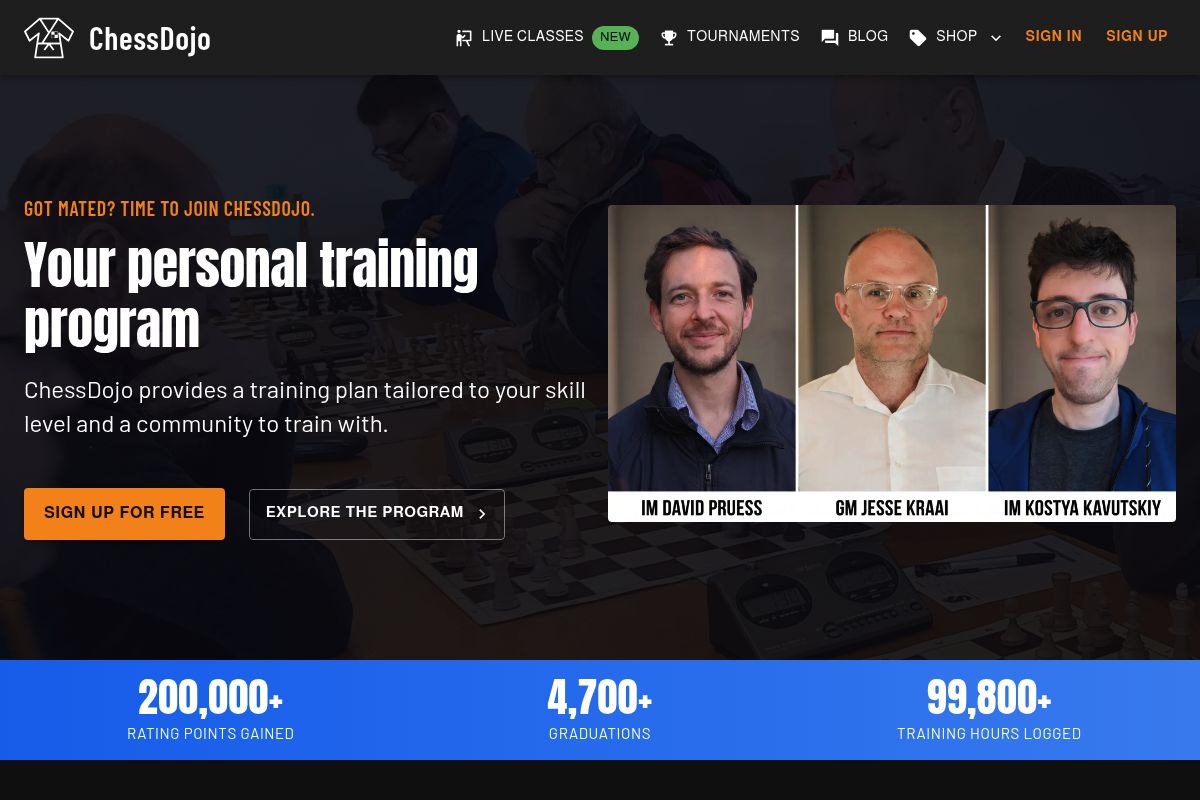
ChessDojo is a structured online program for players from 0 to 2500, focused on building opening repertoires.
Key Features
- Opening Repertoire Spy: Helps you prepare against the specific players you're likely to meet.
- Rating-Specific Courses: Full opening courses by the program's senseis, covering the French Defence, Caro-Kann, King's Indian, and Najdorf Sicilian.
- Live Workshops: Titled instructors run weekly sessions on calculation, endgames, and opening theory.
- Affordable Core Plan: $15 per month or $120 a year.
Best For
ChessDojo is ideal for self-motivated adult improvers who want a clear roadmap and community accountability.
Pros and Cons
- Pro: Affordable, with milestones tailored to specific rating bands.
- Pro: The Opening Repertoire Spy adds real tournament value.
- Con: No automatic game import or built-in engine analysis.
- Con: The community format demands self-discipline.
Rating: 8.0/10
7. DecodeChess: Best for Explainable AI Opening and Game Analysis
7. DecodeChess: Best for Explainable AI Opening and Game Analysis
DecodeChess turns complex engine evaluations into plain-language explanations of threats, plans, and mistakes.
Key Features
- Explainable AI Reports: The Chessy Chat assistant answers opening questions and quizzes you on chess principles.
- Stockfish-Backed Engine: Natural-language coaching sits on reliable Stockfish evaluations.
- Flexible Pricing: A Free plan allows one decoded game per day, an Unlimited plan costs $8.25 per month, and an annual Unlimited plan costs $84.
- Credit Packs: $15 for 60 credits or $25 for 120 credits, valid for 12 months.
Best For
DecodeChess is useful for players up to roughly 2000 Elo, especially those without a personal coach.
Pros and Cons
- Pro: It turns raw engine numbers into readable explanations.
- Pro: The subscription is affordable, and the free tier is genuinely usable.
- Con: No dedicated repertoire-building or drilling features.
- Con: No mobile app.
Rating: 7.7/10
8. iChess.net: Best for Video-Based Opening Courses from Titled Players
8. iChess.net: Best for Video-Based Opening Courses from Titled Players
iChess.net offers a large video course library on openings, tactics, and endgames, taught by grandmasters and titled coaches.
Key Features
- Massive Video Library: Video lessons, eBooks, puzzle packs, and complete opening repertoires.
- Free Sample Lessons: Free playlists covering tricky openings and tactical themes.
- Lifetime Access: Purchased courses stay available indefinitely.
- Flexible Pricing: Free resources are available, and premium courses run from $10 to $100+.
Best For
iChess.net suits visual learners at any level who like working through themed opening series.
Pros and Cons
- Pro: A wide topic range, with lifetime access to purchases.
- Pro: Frequent bundle discounts.
- Con: Less interactive, with no built-in drilling or play.
- Con: The interface feels dated next to newer AI tools.
Key Takeaway: iChess.net offers extensive video courses from titled players with lifetime access, a good match for visual learners.
Rating: 7.6/10
9. Remote Chess Academy: Best for Self-Paced GM Opening Video Courses

9. Remote Chess Academy: Best for Self-Paced GM Opening Video Courses
Remote Chess Academy, founded by Grandmaster Igor Smirnov, is a self-paced video platform built around a systematic, thinking-based approach.
Key Features
- Dedicated Opening Courses: Titles such as The Grandmaster's Openings Laboratory and 8 Aggressive Chess Openings fill specific repertoire gaps.
- Comprehensive Range: Openings, middlegame strategy, endgames, and mindset, organized as complete programs.
- Per-Course Pricing: Typically about $53 to $199, depending on scope and bundle discounts.
- Lifetime Access: No recurring subscription.
Best For
Remote Chess Academy is ideal for adult self-learners who prefer structured video at their own pace and want to buy only what matches their weaknesses.
Pros and Cons
- Pro: Lifetime access and a systematic framework are highly valued by competitors.
- Pro: Per-course pricing means you buy only what you need.
- Con: Courses are a real upfront investment.
- Con: No live coaching or community component.
Rating: 7.5/10
10. Noctie.ai: Best for Human-Like Opening Sparring Practice
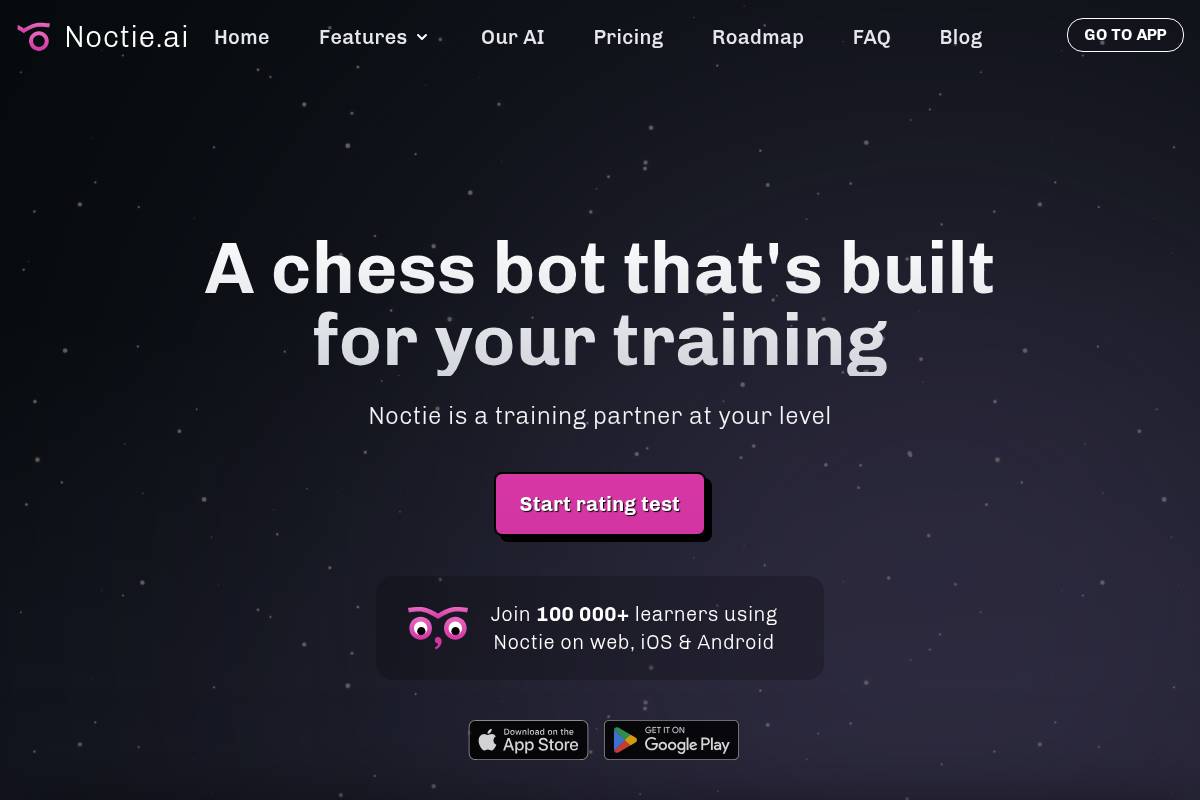
10. Noctie.ai: Best for Human-Like Opening Sparring Practice
Noctie.ai is an AI training bot that simulates human opponents, making it a good way to test new lines under realistic conditions.
Key Features
- Humanlike Opponents: Trained on over a billion human games, it plays like a person at your level, from about 400 Elo up to super-GM (~2800 Elo), including typical errors and realistic move timing.
- Custom Repertoire Drilling: Import your own repertoire as a PGN and drill it through full games.
- Instant Move Feedback: Every move is graded in real time, from Blunder to Excellent.
- Trial and Pricing: A free 7-day trial. Afterward, €14 per month, or €8 per month billed annually.
Best For
Noctie.ai suits tournament players who already have a repertoire and want realistic practice against opponents who respond to prepared lines.
Pros and Cons
- Pro: The most human-feeling bot sparring among AI opponents.
- Pro: Direct PGN import keeps practice relevant.
- Con: Focused purely on sparring, with less instructional content.
- Con: Euro-based pricing can cost more than similar USD subscriptions.
Rating: 7.4/10
Full Comparison: Best Chess Openings for Tournament Players in 2026
| Tool | Live Coaching | AI Analysis | Opening Repertoires | FIDE Pathway | Free Tier |
|---|---|---|---|---|---|
| CircleChess | ✔ | ✔ | ✔ | ✔ | ✔ (demo classes) |
| Chessable | ✘ | ✘ | ✔ | ✘ | ✔ |
| ChessMood | ✔ (weekly) | ✘ | ✔ | ✘ | ✘ |
| ChessBase 17 | ✘ | ✔ (engine) | ✔ (database) | ✘ | ✘ |
| Aimchess | ✘ | ✔ | ✘ | ✘ | ✔ |
| ChessDojo | ✔ (workshops) | ✘ | ✔ | ✘ | ✔ (limited) |
| DecodeChess | ✘ | ✔ | ✘ | ✘ | ✔ (limited) |
| iChess.net | ✘ | ✘ | ✔ | ✘ | ✔ |
| Remote Chess Academy | ✘ | ✘ | ✔ | ✘ | ✘ |
| Noctie.ai | ✘ | ✔ | ✔ (drilling) | ✘ | ✔ (trial) |
How to Choose the Best Chess Opening Platform for You
By Player Type and Group Size
Solo adult improvers often do well with Chessable or Remote Chess Academy. Families and young competitors benefit from an all-in-one ecosystem like CircleChess. Coaches managing several students should look at dashboard-driven platforms such as CircleChess or ChessDojo.
By Budget
On a tight budget, start with Aimchess's free tier or iChess.net's free playlists. Mid-range budgets fit Chessable, ChessDojo, or Noctie.ai. For a full coaching ecosystem, consider CircleChess or ChessMood.
By Use Case
For pure memorization, Chessable's MoveTrainer is built for the job. For scouting an opponent, ChessBase 17 is hard to beat. For a complete path from first move to FIDE-rated play with human mentorship, CircleChess remains the strongest overall choice. For additional buying guidance, see Find nearby Pickleball Tournaments.
What Is Tournament Opening Preparation?
Tournament opening preparation means selecting, learning, and drilling a personal repertoire so you reach a well-understood middlegame against most opponents you'll meet in rated events. It combines theory, engine-assisted analysis, and practical sparring. For a more detailed primer, see 2026.
| Metric | Typical Benchmark |
|---|---|
| Recommended rating to start formal opening study | Roughly 1200+ (after tactics and basic principles) |
| Core repertoire size for one color | 1 to 3 main systems plus key sidelines |
| Typical course price range | $10 to $200 per course or repertoire |
| Common subscription range | $8 to $130 per month depending on platform depth |
| Review cadence for retention | Weekly spaced-repetition or live practice sessions |
Conclusion: Our Top Pick for Tournament Opening Preparation
CircleChess takes the top spot among the best chess openings for tournament players in 2026 because it brings a GM-designed curriculum, AI-powered practice, and a FIDE rating pathway into one ecosystem. For pure memorization, Chessable is an excellent complement. ChessBase 17 is unbeatable for opponent-specific prep, and ChessMood suits players who want a video-first, GM-led repertoire with weekly live practice.
Frequently Asked Questions
What are the best chess openings for tournament players in 2026?
The best approach combines a solid, well-understood repertoire (often built around the Italian Game, Caro-Kann, or Queen's Gambit family) with a platform that helps you drill and test those lines. The ranking above compares the top options.
Which platform is best for beginners building their first opening repertoire?
CircleChess and iChess.net both offer approachable entry points. CircleChess provides live mentor guidance and a personalized roadmap, while iChess.net offers free video playlists to explore ideas before spending money.
Do I need an AI chess coach to prepare openings for tournaments?
An AI coach isn't mandatory, but tools like Aimchess and DecodeChess can speed up preparation by showing exactly where your opening knowledge breaks down in real games.
How much should I expect to spend on chess opening preparation tools?
Budgets vary widely, from free diagnostic tiers on Aimchess to premium ecosystems. Most serious tournament players spend between $10 and $100 per month.
Is ChessBase still worth it for tournament preparation in 2026?
Yes. ChessBase 17 remains the industry standard for opponent-specific database prep, especially for players who need to scout recent opening tendencies.
Can CircleChess help my child prepare for FIDE-rated tournaments?
Yes. CircleChess includes a FIDE rating pathway with milestone-based plans, monthly skill assessments, and mentor feedback designed for young players entering rated events.
What is the difference between Chessable and ChessMood for opening study?
Chessable focuses on spaced-repetition memorization of written courses, while ChessMood is a video-first platform with weekly live GM events. Efficient drillers tend to prefer Chessable; those wanting a coach-like community often choose ChessMood.
Are free chess opening tools good enough for tournament preparation?
Free tiers from Aimchess, Chessable, and iChess.net are useful for exploring ideas, but serious competitors usually need a paid plan or full coaching ecosystem to build a complete, tested repertoire.
Methodology: Rankings are based on independent research into each platform's publicly listed features, pricing, and instructor credentials as of October 2026, combined with weighted scoring across repertoire depth, learning methodology, tournament relevance, value, usability, and progress tracking. Pricing and features change often, so verify current details on each platform's official website before subscribing.